Maintaining Bonds
The American Baptist Home Missions Societies (ABHMS) and Womens' American Baptist Home Missions Society (WABHMS) had a long history of working with Japanese Americans and other migrant communities. When removal and incarceration of Japanese Americans began, the staff of the Baptist missionary organizations were among their first and most forceful advocates, and they provided critical support for incarcerated Baptists throughout the war.
National Organizing
The ABHMS and WABHMS directed almost all Northern Baptist assistance to Japanese Americans during the war. Several national and regional executives of these organizations were directly involved in support work, principally ABHMS Department of Cities Chair John Thomas, who served as the joint administrator for both organizations’ efforts, and LA City Mission Society Director Ralph Mayberry, who worked with the largest regional group of Japanese American Baptists.
Thomas and his staff in the Department of Cities took on a tremendous administrative workload: they coordinated home missionaries, paid incarcerated pastors’ salaries, assisted in student and worker relocation, engaged in publicity and legal advocacy on behalf of Japanese Americans, and planned joint operations with organizations like the American Friends Service Committee (AFSC). Thomas himself served on the board of the National Japanese American Student Relocation Council and helped establish the Religious Council on War Relocation, and maintained extensive correspondence with other religious workers and missionaries, Japanese American community leaders, and government officials.
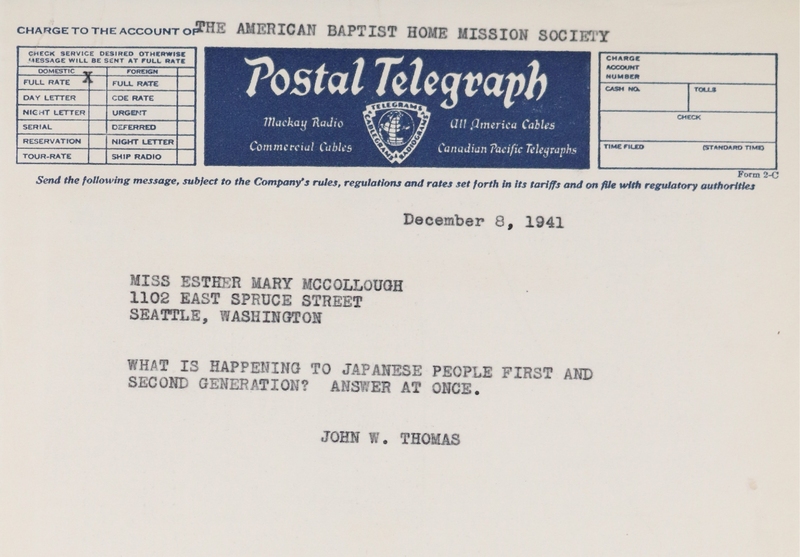
John Thomas, ABHMS Department of Cities Chair, telegrammed Seattle-area WABHMS missionary Esther McCollough for information the day after the attack on Pearl Harbor.
Local Support
Direct "on-the-ground" support to incarcerated Baptists came through local home missions organizations and individual home missionaries, who found multiples ways to continue to serve. Many missionaries, such as Seattle’s Emery Andrews and Esther McCollough, relocated to the camps where their congregations were incarcerated, where they performed teaching, nursing, and ministerial duties. Others, like LA’s Virginia Swanson, moved to support Japanese Americans who relocated out of the camps to other parts of the country. Home missionaries were joined in this work by foreign missionaries who had been expelled from Japan at the start of the war, including Royal Fisher, John C. Foote, and Amy Acock. Missionaries, including leaders like LA’s Ralph Mayberry, also frequently travelled between camps; they served as required escorts for Japanese American ministers, and delivered messages between friends and family incarcerated at different locations.
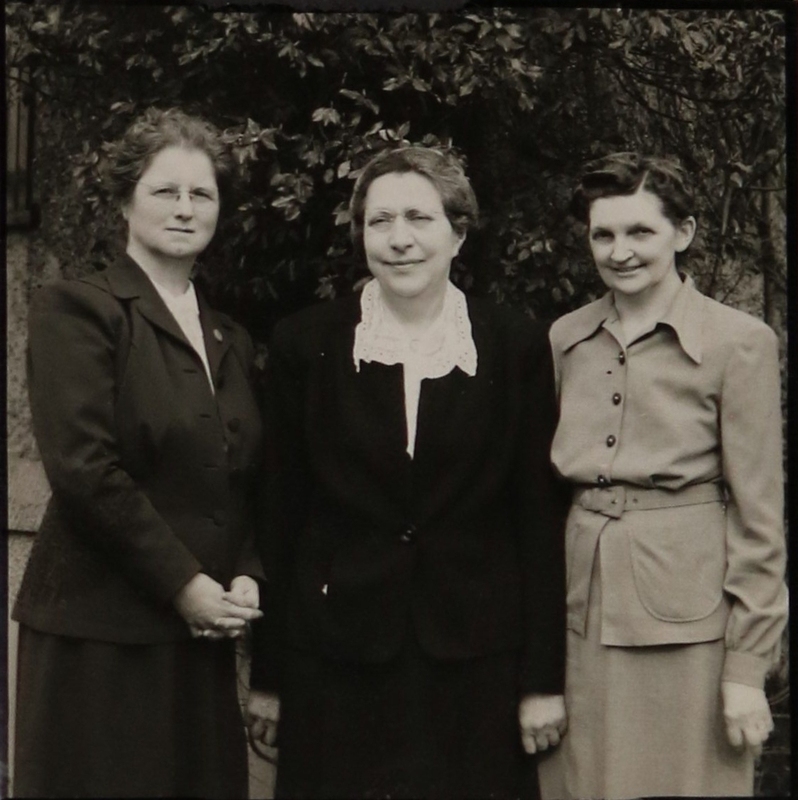
JBC Seattle retained strong connections between its members and home missionaries who worked with them such as (from left) Florence Rumsey, Esther McCollough, and May Heard.
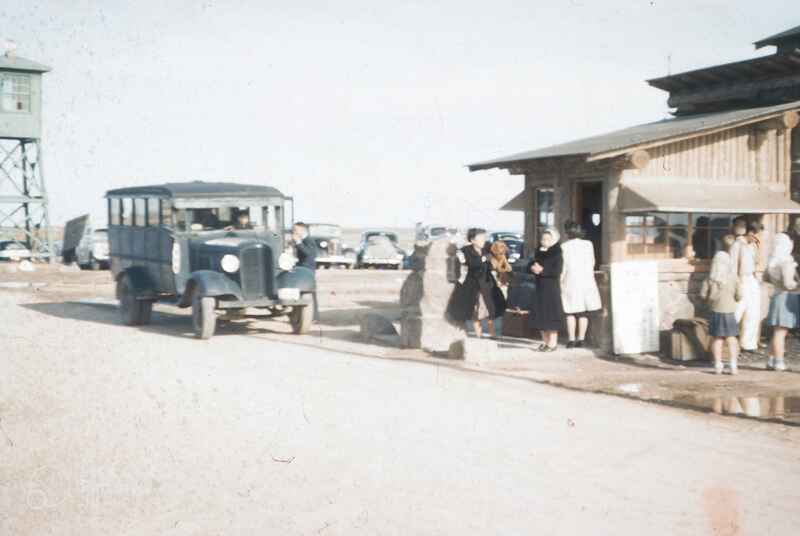
Emery Andrews made 56 trips between Seattle and Minidoka in his distinctive truck, the "Blue Box," to deliver personal items for incarcerated families and carry their messages back and forth.
The Limits of Support
While the Northern Baptist leadership and home missions establishment were generally allies to Japanese Americans during the war, there were limits to their support. In the wartime environment, local missions groups felt pressure to distance themselves from Japanese American communities, and Baptist officials avoided open criticism of the government’s policies around removal and incarceration.
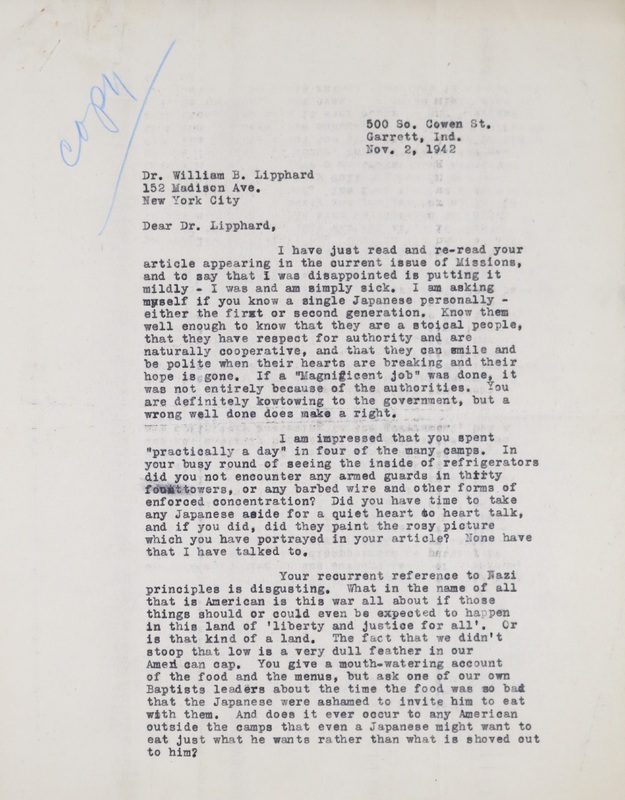
After writing her critical letter to William Lipphard, Goldie Nicholson wrote John Thomas to apologize in case she was dismissed for insubordination. He replied "If you're fired I'll resign and picket the place!"
In November 1942, Missions Magazine editor William Lipphard published an article in the magazine that presented incarceration in terms generally favorable to the government. Lipphard emphasized positive descriptions of camp life:
At another camp my arrival almost coincided with the arrival of a new baby in the hospital maternity ward. The boy infant was only four hours old when the nurse showed him to me, a lusty, healthy specimen of Japanese babyhood …
William Lipphard, "What has Happened to America's Japanese?" Missions Magazine 33 (1942)
WABHMS missionary Goldie Nicholson wrote a scathing response to the article, which Lipphard published, disputing Lipphard's account point-by-point:
... And while inspecting that lusty, healthy specimen of Japanese babyhood, did it not occur to you that his mother’s heart might be breaking at the thought of her child being born in a concentration camp?
Goldie Nicholson, letter, Missions Magazine 34 (1943)