Finding a Way Forward
Not all Japanese Americans who were forcibly incarcerated in 1942 remained in the camps for the duration of the war. While they were barred from returning to the exclusion zone on the west coast, the US government made provisions for at least some Japanese Americans – particularly Nisei, as US citizens – to work or completely relocate outside of the camps. Officials such as WRA Director Dillon Meyer viewed relocation as a mechanism to “Americanize” and assimilate Japanese Americans, especially Nisei. Ultimately some 40,000 Japanese Americans left the camps through several avenues.
Student Relocation
The first organized resettlement of Japanese Americans out of incarceration involved the mainly Nisei students who were forced to leave or prevented from enrolling in colleges and universities in the exclusion zone. Beginning in May 1942 the WRA delegated responsibility for these students to the National Japanese American Student Relocation Council (NJASRC), a body organized by the American Friends Service Committee (AFSC) and backed by public and private representatives of higher education, including the Northern Baptists and other major religious denominations. The member organizations of the NJASRC fielded requests from incarcerated students for help applying to or attending schools, sought placements for students, and arranged scholarship funding and employment to cover the costs of attendance.
Relocating students were keenly aware of the benefits they had received over their families and peers still incarcerated, and of the ways in which they served as “ambassadors” for Japanese Americans in unfamiliar communities. As a group they were highly politically aware and deeply concerned about the future of Japanese Americans; among Baptist students, a significant number pursued ministry, social work, or other socially conscious career paths. These students’ experiences and feelings during the war are well-represented in the extensive correspondence they exchanged with the NJASRC participants who assisted them, such as John Thomas of the ABHMS.
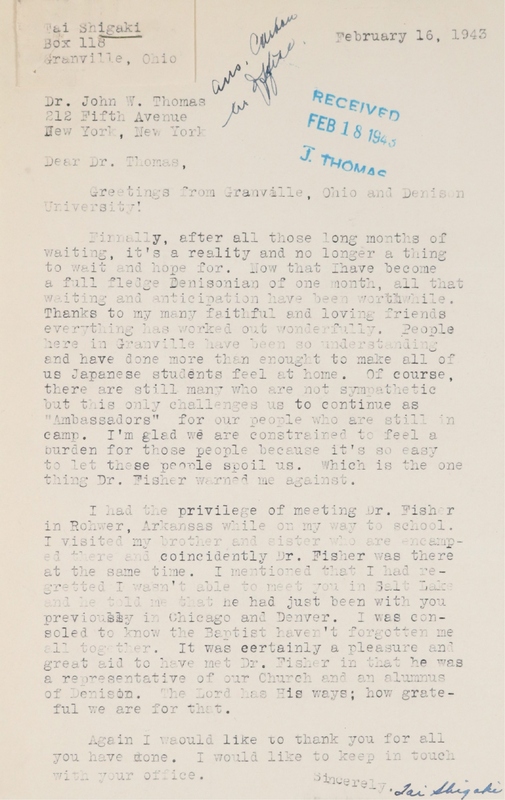
Los Angeles native and future missionary Tai Shigaki wrote to John Thomas after he advocated on her behalf to pursue theology studies. Her positive experiences with ABHMS missionaries influenced her vocational choice.
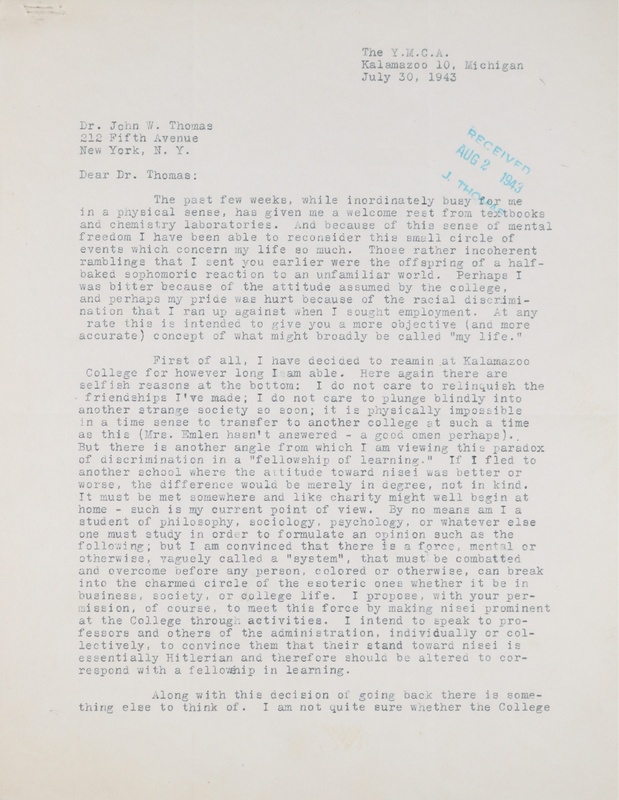
While anti-Japanese prejudice was less prevalent outside of the western U.S., Nisei students still encountered discrimination, as Tom Sugihara discussed in his correspondence with John Thomas.
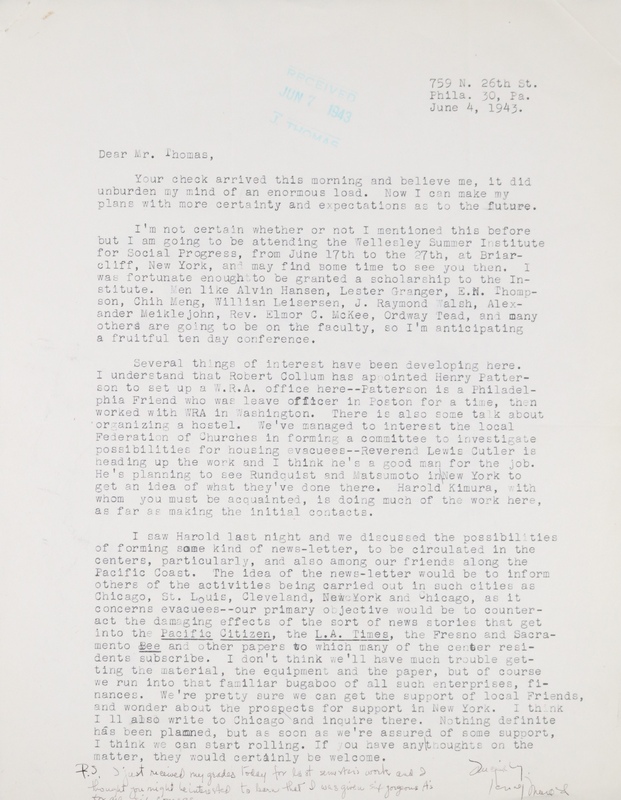
Journalist and future social worker Kenneth Murase was one of many Nisei students intensely concerned with maintaining solidarity and connections among Japanese Americans.
Military Service
Another path out of the camps for Nisei was military service. Incarcerated Japanese Americans on the US mainland were initially excluded from voluntary or draft service, but following successful formation of the volunteer Hawaiian 100th Infantry Battalion in 1942, the government called for additional volunteers among mainland Nisei in early 1943. An initial group of 1,500 mainland volunteers joined 2,500 Hawaiians to form the 442nd Regimental Combat Team, which fought in Italy and Southern France and became the most decorated unit in US military history; by war’s end nearly 10,000 Nisei had served in the unit. Ultimately over 30,000 Nisei served in the military during World War II, whether in the 442nd, as translators in the Military Intelligence Service, or in non-combat roles.
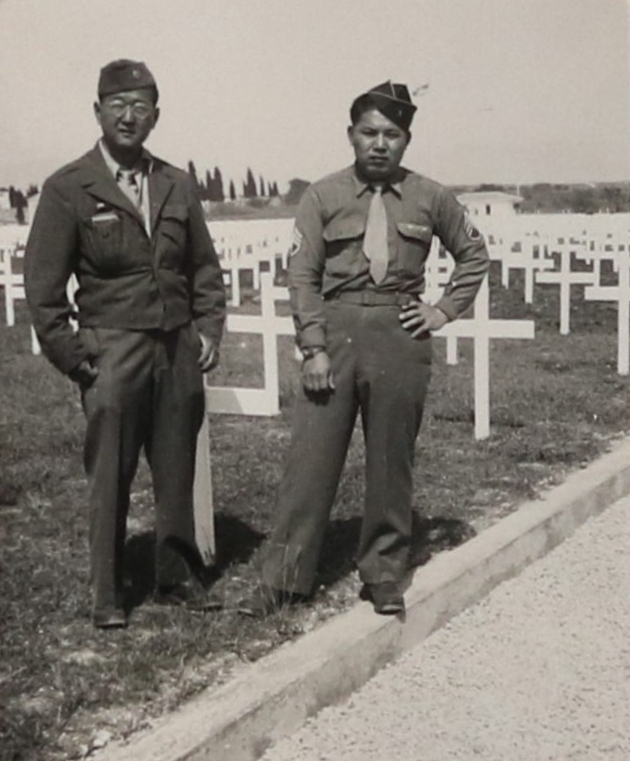
In his photo scrapbook from his European tour of duty, Kazuo Sato included images of the American cemetery in Nettuno, Italy.

Fresno native Mitsuo Kawamoto and his younger brother Haruo joined FBC Detroit’s “Nisei-Caucasian Fellowship” after relocating from Rohwer. When the brothers enlisted, Mitsuo maintained close correspondence with pastor Hillyer Straton, notifying him of Haruo’s death in 1945.
Work Relocation
Responding to wartime labor shortages, some incarcerees gained clearance to work outside the camps. Initially they had access only to nearby jobs and continued to be incarcerated, but by 1944 a number had fully resettled to other parts of the country, primarily in the Midwest and Mid-Atlantic. Work relocation was especially common among families whose children had already relocated for education, and among servicemen who had completed tours of duty or been discharged.
Religious organizations played a significant role in facilitating work relocation. The ABHMS and AFSC organized hostels for Japanese workers arriving in midwestern cities, with WABHMS missionaries including Virginia Swanson, Muriel Ferguson, and Goldie Nicholson serving as hostel staff and providing aid to relocating families. The ABHMS helped arrange work releases and directly hired several Japanese American staff members to assist in relocation work, including Ina Sugihara, Waka Mochizuki, and Jobu Yasumura.
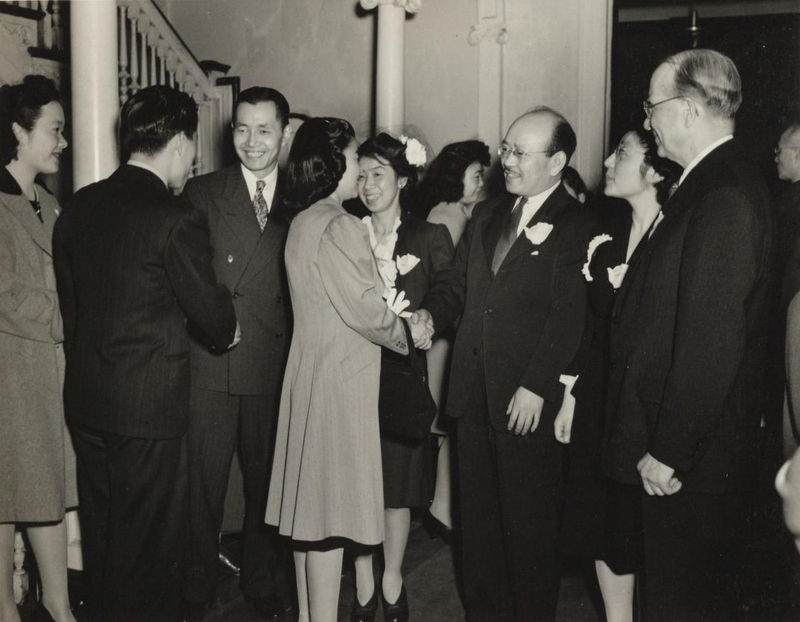
Jobu Yasumura (third from left) greets guests at a monthly tea for relocated Japanese Americans at the Japanese Methodist Church, New York City, 1944.