Living Behind Barbed Wire
Daily life in the camps was stark. Most of the camps were remote with many in desert areas or, in the case of Jerome and Rohwer, swamps. Most camps were surrounded by barbed wire and guard towers. Shigeko Uno gives this description of Minidoka:
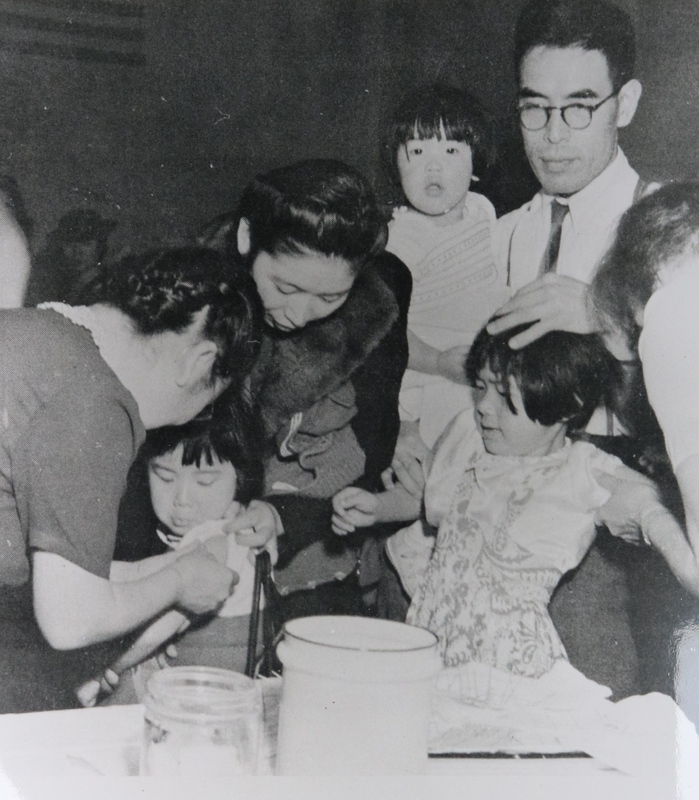
Issei and Nisei physicians volunteer to give inoculations during registration for evacuation in San Francisco. Close living quarters in the camps increased the frequency of epidemics.
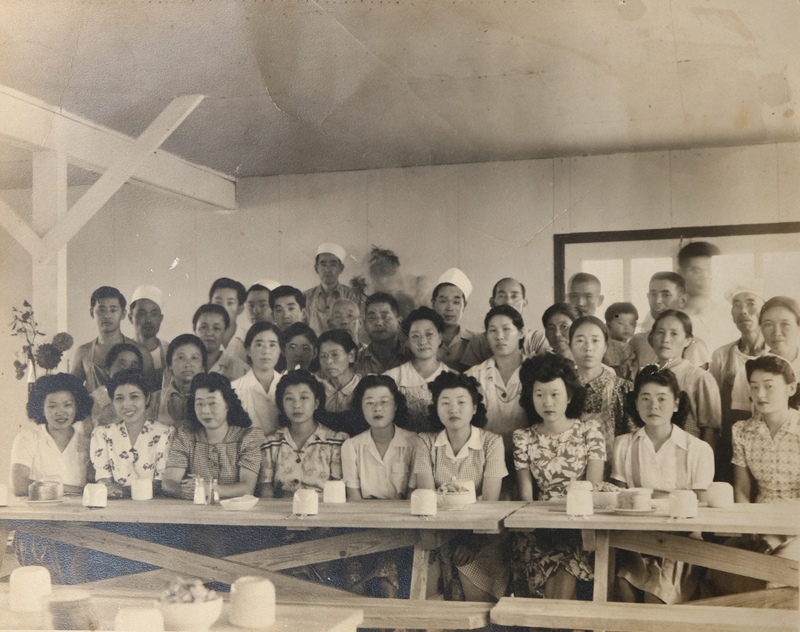
Mess hall staff pose for a photo at Poston. Cafeteria-style dining cut into family time as children and adults often ate separately.
Making Ends Meet
The camps functioned as small cities. Incarcerees worked as doctors, nurses, barbers, beauticians, cooks, janitors, farmers, lawyers, teachers, and many other jobs that were needed to make the camp operate. They received nominal wages: $12-$16 per month for laborers and clerks, $19 per month for professionals like doctors or dentists. Many had more free time than they were accustomed to. English classes as well as classes devoted to hobbies like woodcarving, sewing, or other artistic pursuits sprang up where someone was knowledgeable in that area. Since the only furnishings provided were cots and a pot-bellied stove for heating, they built tables, chairs, shelves, and other furniture from scrap wood left from the barrack construction and sewed curtains, quilts, and other items to improve their quarters.
"Normal" Life
Parents and teachers tried to shield children and youth from the trauma of incarceration by trying to create a “normal” life. Many of the youngest incarcerees remember the experience as an adventure and did not fully realize the injustices committed until much later in life. School plays, school newspapers, athletic teams, clubs, and scouting were intended to approximate the atmosphere of the lives they had left behind. Many adults did not talk about their experiences after the war and some only began to speak of it when children or grandchildren would ask, perhaps for a school project. Despite these attempts, the incarceration had lasting effects on Japanese American culture.
Because staff administrators spoke only English, they often chose Nisei to be block leaders. This upended traditional Japanese culture and left many Issei feeling displaced within the community. Family life was complicated by things like a communal dining hall where children and young people wanted to sit with their friends and family meals became impossible. These and many other realities of life in camp exacerbated existing tensions between first generation migrants and their American born children.
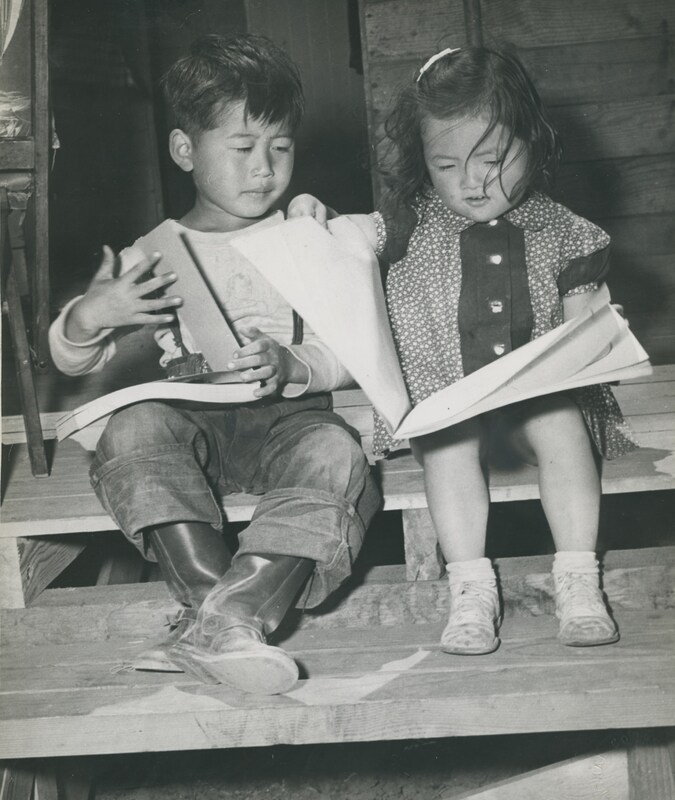
Young children look at library books at Tanforan Assembly Center.
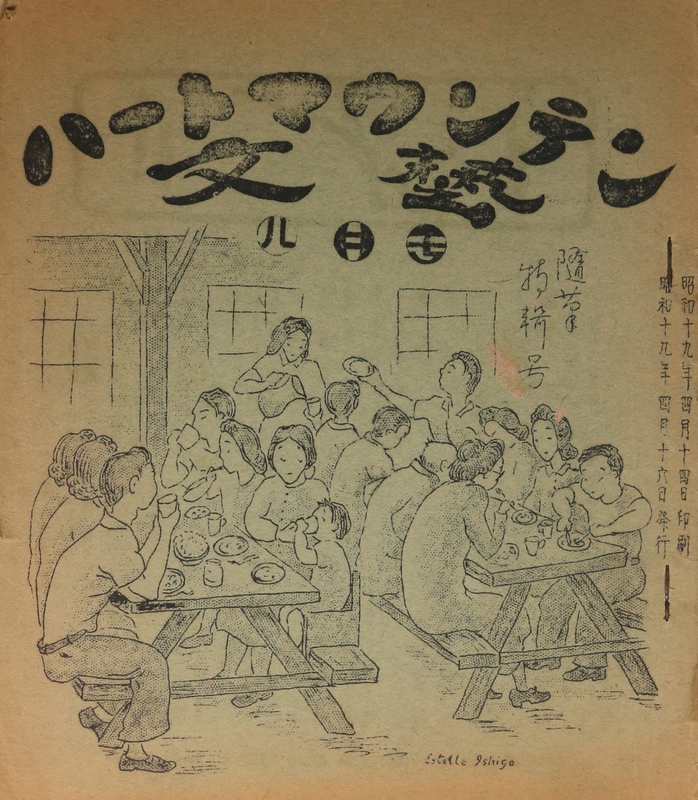
Camp publications like the Heart Mountain Bungei, a poetry magazine, helped incarcerees pass the time.
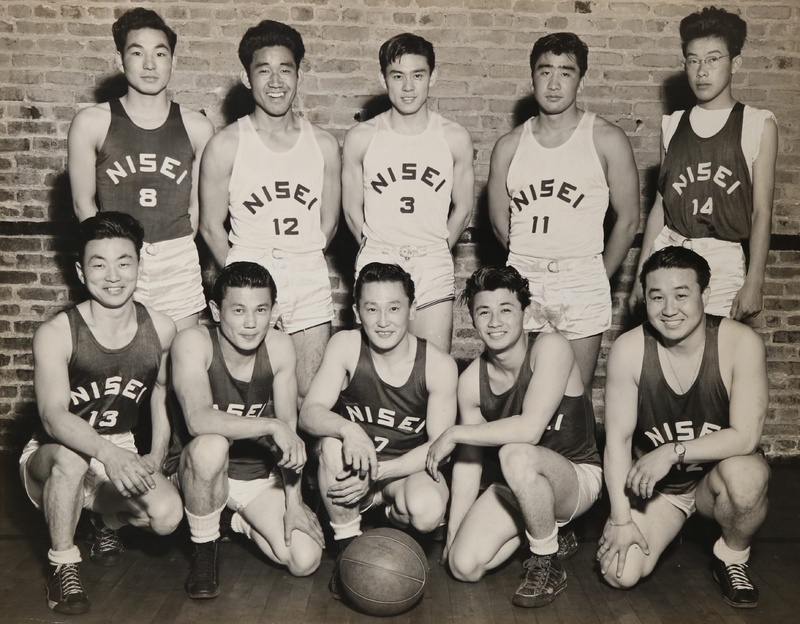
Rev. Paul Nagano, himself a recent college graduate, organized a basketball team and other services for young men at Poston.